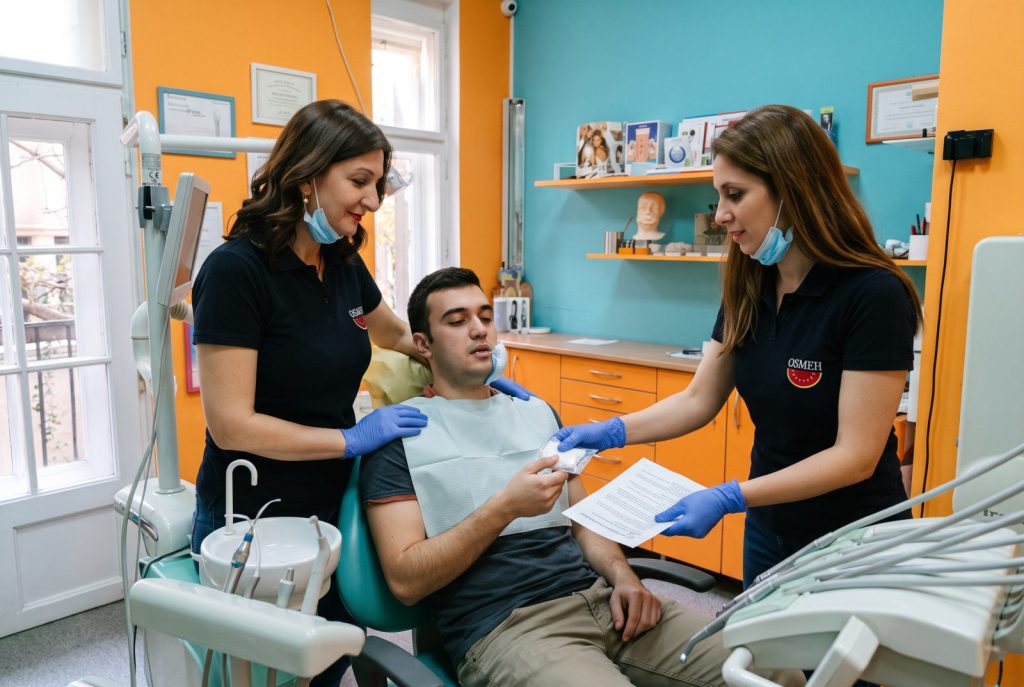
Just hearing that surgery is needed makes every patient at least a little uneasy. That is why we pay special attention to this part of our work. We explain clearly what to expect from the procedure, and with careful, professional work we keep discomfort to a minimum. Tooth extraction, root resection, removal of jaw cysts, surgical treatment of periodontal disease and gum recession, and implant placement do not have to be a traumatic experience when they are done the right way. Procedures are performed by Dr Slađana Radan, specialist in oral surgery.
Wisdom teeth are the last teeth in the dental arch and erupt between the ages of 18 and 25. Because of lack of space they sometimes do not erupt, grow in the wrong position or limit jaw growth. Problems with impacted wisdom teeth are not certain, but they are common:
Because of the pain that can occur, we recommend surgery. It is done under anaesthesia, so the procedure is painless.
An infection at the tip of the tooth root is treated surgically, together with root canal treatment of the canal where the infection started. Apicoectomy is one of the most common procedures in oral surgery. Before surgery we always check whether the tooth can be treated endodontically, in a conservative way.
Cysts can develop as a result of untreated infections. They are usually not visible and cause no symptoms until they grow and cause swelling and pain. If not removed in time, they can even lead to tooth loss. After the procedure it is important to follow the surgeon’s advice to avoid complications.
It reduces the depth of periodontal pockets and, together with good oral hygiene, prevents the disease from coming back. The most common method is flap surgery, which removes the diseased tissue under the gum.
Poor oral hygiene leads to dental plaque, then to gum inflammation and gum recession. Recession can be generalised, affecting several teeth, or localised, affecting one tooth.
When one, several or all teeth in the jaw are missing, dental implants are the best solution. They are placed in the jaw bone like screws that act as roots for the crowns. Today it is a routine procedure.
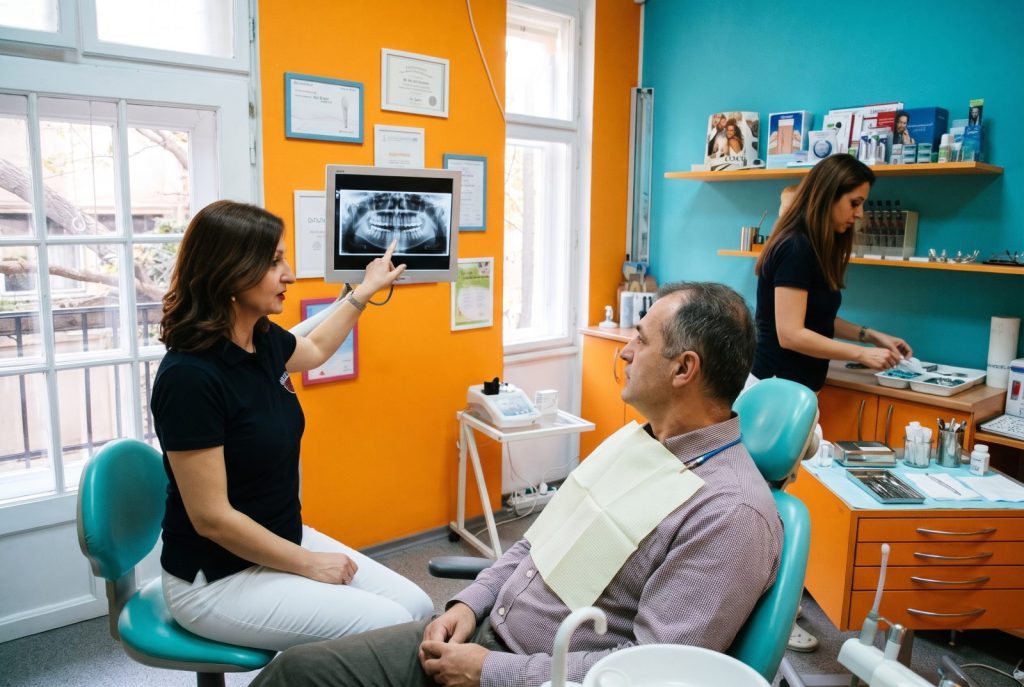
Before every procedure we review the X ray and explain what we will do and why. The procedure is done under local anaesthesia.
In the first days after the procedure use cold compresses, eat soft and lukewarm food, do not smoke and do not rinse your mouth hard. If swelling or pain gets worse instead of better, contact us.
The procedure is done under anaesthesia, so it is painless. You may feel discomfort for a few days, which is eased with painkillers as advised by the doctor.
Usually a few days. Recovery depends on the type of procedure, and you get detailed instructions on what to do.
Soft and lukewarm food for the first days, chewing on the other side. Avoid hot, hard and spicy food.
Not always. We assess its position on the X ray and whether it may cause problems, and advise you whether it should be removed.
Oral surgery is performed by Dr Slađana Radan, specialist in oral surgery.
Maximum dedication and an individual approach to every patient is our motto.